




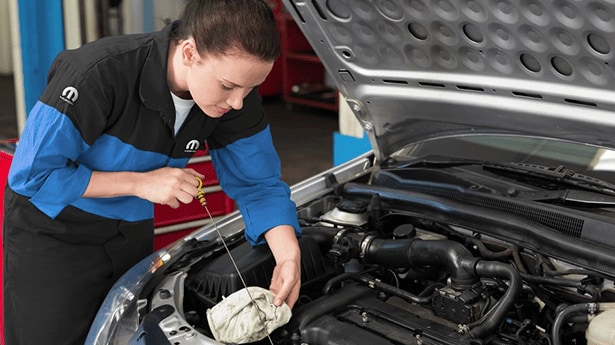
Preparing vehicle fluids for cold weather requires inspecting fluid levels, testing concentration ratios, and replacing moisture-contaminated or depleted fluids before sub-freezing temperatures arrive. Winter fluid preparation involves verifying engine coolant maintains a 50/50 antifreeze-to-water ratio, switching to sub-zero windshield washer fluid, choosing motor oil with low-temperature viscosity ratings like 0W-20 or 5W-20, and testing hydraulic brake fluid for water absorption.
Sub-zero temperatures drastically alter fluid behavior inside your vehicle. Cold weather thickens liquids, reduces chemical protection against corrosion, and exposes hidden moisture within hydraulic lines. Routine maintenance that seems adequate during mild autumn weather can lead to severe mechanical issues once freezing conditions arrive.
A complete cold-weather fluid service involves six primary vehicle fluids:
- Engine coolant (antifreeze)
- Motor oil
- Hydraulic brake fluid
- Windshield washer fluid
- Automatic transmission fluid
- Power steering fluid (where applicable)
When preparing a Ram 1500 or Jeep Grand Cherokee for harsh winter driving near Lake Erie, inspecting these critical systems prevents emergency breakdowns. Drivers visiting our facility at 36845 Euclid Ave, Willoughby, OH 44094 receive thorough fluid testing to ensure every system handles severe winter cold. If you notice slow engine cranking or decreased heater output, give our team a quick call to verify your vehicle's fluid integrity, or drop by our Willoughby service department for a pre-winter inspection.
Why Is Coolant or Antifreeze the Most Important Fluid to Check Before Winter?
Engine coolant is the single most critical fluid to test before freezing weather because a compromised cooling system can cause catastrophic engine block cracking. Ethylene glycol-based coolant lowers the freezing point of water inside the cooling jacket, preventing internal fluid expansion that cracks engine blocks, ruptures radiator cores, and destroys heater matrixes.
A standard 50/50 mixture of distilled water and pure antifreeze protects cooling systems down to -34°F. In areas experiencing sustained polar cold or severe lake-effect freezes along Euclid, increasing the concentration to a 60/40 ratio drops freeze protection to -62°F, while a 70/30 ratio provides maximum protection down to -84°F. Concentrated antifreeze should never exceed a 70% concentration, as pure ethylene glycol freezes at roughly 8°F without water molecules present to disrupt crystal formation. AAA research highlights that proper mixture verification is essential before ambient temperatures drop below freezing.
Over time, corrosion inhibitors within engine coolant break down. Silicates, organic acid technologies ( OAT), and hybrid organic acid technologies ( HOAT) deplete, allowing scale, rust, and sludge to build up inside engine galleries and water pumps. Testing coolant involves using a refractometer or hydrometer to measure glycol concentration, alongside test strips to check chemical pH levels.
If coolant appears brown, rusty, or milky, a full system flush is required:
- Brown or rusty coolant: Signals active corrosion inside iron engine components or radiator cores.
- Milky appearance: Indicates engine oil contamination, usually caused by a failing head gasket.
- Gritty texture: Points to silicate precipitation, which clogs heater cores and compromises heating performance.
Using factory-specified coolant formulations prevents chemical reactions that damage aluminum engine blocks and radiators. Vehicle owners maintaining a Dodge Durango equipped with a 3.6L Pentastar V6 or 5.7L HEMI V8 can pick up genuine Mopar parts and fluids engineered specifically for OEM cooling system tolerances.
How Does Cold Weather Impact Motor Oil Viscosity and Winter Engine Protection?
Cold weather causes motor oil to thicken, slowing oil circulation during startup and increasing friction across engine bearings, camshafts, and cylinder walls. The winter rating in motor oil designations—represented by the "W" in 0W-20 or 5W-30—indicates cold-temperature pumpability, where a lower number flows faster at zero degrees.
Using motor oil that is too thick during freezing weather starves internal components of lubrication during initial engine turnover. Thick oil resists movement through internal oil passages, forcing the oil pump pressure relief valve open and delaying critical oil delivery to overhead valvetrains. Consumer Reports notes that selecting the precise low-temperature oil viscosity specified in your owner's manual prevents excessive starter motor strain and severe engine wear.
Full synthetic motor oil delivers superior winter protection compared to conventional motor oil. Standard conventional lubricants contain wax paraffin compounds that crystallize and gel when temperatures plunge, making engine cranking difficult. Full synthetic formulations resist cold-temperature gelling, pouring freely down to -40°F.
Key advantages of full synthetic oil for winter driving include:
- Instant startup lubrication: Reduces dry-start engine wear during freezing mornings.
- Lower cold-cranking resistance: Lightens battery draw and extends starter motor life.
- Extended drain intervals: Maintains chemical stability across 7,500 to 10,000 miles, compared to 3,000 to 5,000 miles for conventional fluids.
- Sludge prevention: Resists moisture accumulation from short winter trips where the engine does not reach full operating temperature.
Drivers preparing for freezing commutes benefit from scheduling a winter service appointment to exchange aged motor oil for fresh, low-viscosity synthetic engine oil before heavy frost arrives.
Why Is Checking Brake Fluid Vital Before Freezing Weather Arrives?
Checking brake fluid before freezing weather arrives is vital because hydraulic brake fluid is hydroscopic, meaning it continuously absorbs atmospheric moisture that can freeze inside hydraulic lines and cause sudden brake failure. Water contamination lowers the fluid's boiling point and creates free-water pockets that form solid ice crystals inside micro-passages when ambient temperatures dip below 32°F.
Ice inside hydraulic brake lines causes severe braking hazards:
- Blocked hydraulic pressure transmission: Solid ice acts as a plug inside narrow brake lines, preventing hydraulic fluid from reaching brake calipers.
- Stuck brake calipers: Ice trapped inside caliper pistons prevents pads from retracting, causing dragging, severe pad overheating, and premature rotor warping.
- Loss of pedal response: Water turning into ice expands, forcing residual line pressure upward or blocking fluid displacement, creating a hard or completely unresponsive brake pedal.
- Uneven vehicle pulling: Ice blocking hydraulic pressure on one side of the vehicle causes violent pulling toward the functional side during emergency stops.
Brake fluid testing measures water concentration using electronic brake fluid testers or optical refractometers. Good Sam Roadside safety standards emphasize that brake fluid containing more than 3% water contamination requires immediate flushing to restore safety. Fresh glycol-based DOT 3 or DOT 4 fluid should appear clear or light amber; dark, cloudy, or black fluid indicates moisture saturation and internal seal degradation.
Modern anti-lock braking systems ( ABS) and electronic stability control ( ESC) rely on micro-valves inside the hydraulic control unit to cycle line pressure rapidly. Moisture freezing inside these sensitive control valves can lock up ABS pumps, disabling traction control right when icy roads demand maximum electronic intervention.
Which Additional Essential Fluids Demand Inspection Before Winter Set-In?
Windshield washer fluid, automatic transmission fluid, and power steering fluid require thorough testing to ensure visibility, smooth gear shifting, and responsive steering control during cold snaps.
Windshield Washer Fluid
Summer windshield washer fluid consists primarily of water and mild soap, causing it to freeze solid at 32°F. Freezing washer fluid expands inside the washer reservoir, cracking plastic fluid tanks, bursting rubber supply hoses, and destroying internal electric pump impellers.
Winter-rated washer fluid incorporates alcohols like methanol or isopropanol, lowering the fluid's freezing threshold down to -20°F or lower. NHTSA safety guidelines highlight that sub-zero de-icing washer fluid is essential to dissolve windshield frost and clear corrosive road salt spray instantly without flash-freezing across the glass.
Automatic Transmission Fluid
Automatic transmission fluid ( ATF) powers hydraulic valve bodies, lubricates planetary gearsets, and cools friction clutch packs. Cold weather thickens aged transmission fluid, causing delayed gear engagement, harsh shifting, and sluggish acceleration until the transmission warms up.
Always check transmission fluid according to OEM guidelines:
- Dipstick-equipped models: Check level while the vehicle is idling on level ground with fluid at warm operating temperature.
- Sealed transmission units: Many modern 8-speed automatic transmissions require specialized fill-plug level inspections performed at precise scan-tool fluid temperatures.
- Fluid condition check: Fresh fluid is bright red; dark brown or burnt-smelling fluid indicates thermal breakdown and requires fluid replacement.
Power Steering Fluid
Hydraulic power steering pumps struggle to circulate cold, contaminated power steering fluid, leading to heavy steering effort and pump whine on cold mornings. Many modern Chrysler, Dodge, Jeep, and Ram vehicles utilize electric power steering ( EPS) systems, eliminating traditional hydraulic fluid reservoirs entirely. For vehicles equipped with hydraulic or electro-hydraulic systems, verifying fluid level and using factory-recommended fluid formulations preserves steering rack seal integrity throughout winter.
What Do Local Drivers Ask Most About Cold-Weather Fluid Maintenance?
How do you prepare vehicle fluids for cold weather?
Q: What ratio of coolant to water is recommended for winter driving?
A standard 50/50 ratio of antifreeze and distilled water is recommended for general winter driving, providing freeze protection down to -34°F. In areas subject to severe sub-zero cold fronts, increasing the concentration to a 60/40 or 70/30 coolant-to-water mixture drops freeze protection down to -62°F or -84°F respectively, preventing cooling system freeze-ups and engine block damage.
Does synthetic oil extend winter change intervals compared to conventional oil?
Q: Does full synthetic motor oil really extend winter oil change intervals?
Full synthetic motor oil maintains its chemical structure and resists oxidation longer than conventional oil during winter driving. Synthetic formulations typically allow drain intervals between 7,500 and 10,000 miles, compared to 3,000 to 5,000 miles for conventional oils. Synthetic oil flows immediately down to -40°F, providing superior startup wear protection during cold winter mornings.
Why does summer washer fluid freeze in cold weather?
Q: Why does summer windshield washer fluid freeze so quickly in cold weather?
Summer windshield washer fluid consists mostly of water and detergent compounds, causing it to freeze at 32°F inside washer reservoirs, fluid lines, and spray nozzles. Winter-rated washer fluids incorporate de-icing alcohols such as methanol, lowering the freezing point down to -20°F or lower to prevent line freeze-ups and clear road salt spray.
What happens if water gets into brake fluid before winter?
Q: What happens if moisture contaminates my vehicle's brake fluid before a freeze?
Moisture trapped inside glycol-based brake fluid can freeze into solid ice crystals when ambient temperatures drop below freezing. Ice blocks hydraulic pressure transmission inside narrow brake lines, resulting in stuck brake calipers, uneven vehicle pulling, a spongy or hard pedal, or complete brake system failure during emergency stopping maneuvers.
How do I check transmission fluid before cold weather arrives?
Q: How often should I check my power steering and transmission fluids before winter?
Inspect transmission and power steering fluids during every seasonal oil change or pre-winter vehicle inspection. Check for proper fill levels, burnt smells, or dark discoloration. Many modern Chrysler, Dodge, Jeep, and Ram vehicles feature sealed automatic transmissions and electric power steering systems that require specialized service inspection procedures.