




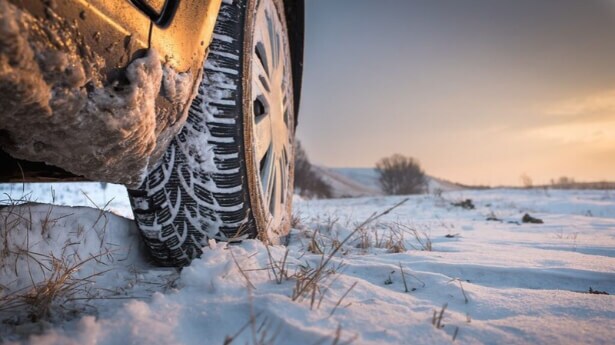
Drivers should switch from all-season tires to dedicated winter tires when ambient daytime temperatures consistently fall below 45 degrees Fahrenheit, which typically occurs between late October and mid-November. Waiting for the first major snowfall leaves vehicles operating on stiffened rubber compounds that lose critical friction on cold, dry, and wet pavement. Installing a dedicated winter set before freezing conditions settle in ensures maximum traction, reliable emergency braking, and stable vehicle handling throughout the cold season.
All-season tires are engineered to deliver balanced, year-round usability across a broad spectrum of moderate driving conditions. According to the National Highway Traffic Safety Administration, while all-season tires provide light mud-and-snow capability, dedicated winter tires are engineered specifically to remain effective in severe winter conditions and deep snow. As autumn transitions into winter, cold asphalt cools tire treads rapidly. Even on completely dry pavement, ambient cold reduces the ability of standard tread compounds to grip surface imperfections.
Our service advisors regularly see drivers delay their seasonal tire changeover until the morning of the first significant storm. This delay often results in crowded service schedules and unnecessary driving hazards during the season's first icy morning commute. A planned seasonal swap keeps vehicle owners ahead of regional winter weather shifts, ensuring vehicles remain safe and capable before road surfaces freeze over.
When preparing for winter maintenance, drivers can easily navigate to our service center location or call our team directly at (440) 597-2588 to discuss tire inventory, seasonal inspection schedules, or mounting options.
Why the 45-Degree Threshold and Early Snow Demand Action
Tire rubber undergoes a fundamental chemical and physical change at 45 degrees Fahrenheit, often called the glass transition point, where standard all-season rubber hardens and loses its elasticity. Once all-season rubber drops below this critical threshold, the compound stiffens into a firm, rigid state that cannot conform to the microscopic textures of the road. Dedicated winter tires, by contrast, utilize advanced silica-infused compounds and natural rubber formulations engineered to stay soft and pliable well below freezing.
Waiting for initial snow accumulation before scheduling a tire swap creates significant driving risks. Cold morning frost, bridge icing, and shaded pavement freezes routinely happen weeks before plows hit the streets. In lakeside communities like Willoughby, proximity to open water regularly brings fast-moving squalls that drop temperatures sharply and cover pavement with slush during afternoon commutes. If a vehicle is riding on hardened all-season tires, steering precision drops and stopping margins evaporate before the driver realizes the road has frozen.
Key reasons to make the switch at the 45 degrees Fahrenheit threshold include:
- Pliable Rubber Contact: Flexible tread blocks mold into the coarse surface texture of freezing pavement for immediate grip.
- Enhanced Cold-Wet Adhesion: Specialized hydrophilic compounds actively channel away freezing road moisture to prevent hydroplaning.
- Proactive Scheduling: Changing tires ahead of the first cold snap avoids seasonal service rushes and backordered tire sizes.
- Uniform Vehicle Dynamics: Fresh winter rubber ensures anti-lock brakes and stability systems operate with optimal mechanical grip.
Equipping your truck or sport utility vehicle with factory-approved winter wheels and tires maintains that secure, luxury SUV feel on unpredictable terrain. To order winter wheel sets, tire pressure sensors, or cold-weather maintenance accessories, explore our Mopar parts department for certified components designed for your exact make and model.
Tread Sipes and Braking Distance: How Cold-Weather Compounds Stop Shorter
Dedicated winter tires consistently shorten stopping distances by 30 to 40 percent on packed snow and glare ice compared to standard all-season tires. In standardized snow braking evaluations conducted by Tire Rack from a speed of 25 mph, vehicles equipped with conventional all-season tires required over 80 feet to come to a complete stop, whereas dedicated winter tires stopped the vehicle in under 60 feet. That margin of more than 20 feet frequently represents the difference between a safe stop and a front-end collision.
This performance advantage stems from tread sipes, which are microscopic, zigzag slits engineered directly into each tread block. As a tire rolls under vehicle load, these sipes open and close dynamically, performing two essential physical functions:
- Creating Biting Edges: The flexing sipes generate thousands of microscopic mechanical edges that dig into hard-packed snow and crusty surface ice to provide continuous forward and lateral traction.
- Capillary Water Evacuation: Friction generated by a vehicle rolling over ice creates an ultra-thin film of liquid water. Sipes pull this liquid film away from the contact patch through capillary action, allowing the tire's rubber compound to make direct contact with the icy roadbed rather than hydroplaning across it.
In addition to advanced siping, winter tires feature deeper directional tread grooves designed to evacuate heavy slush and prevent snow packing inside the tread channels. When snow packs into an all-season tire's shallow grooves, the tire turns into a smooth, frictionless cylinder. Winter tread patterns actively compress snow into the tread voids and eject it as the wheel rotates, using snow-on-snow friction to generate drive traction.
AAA safety recommendations emphasize that winter tires must always be installed as a complete, matched set of four. Fitting winter tires only to the front or rear drive wheels creates a dangerous traction imbalance. If winter rubber is installed exclusively on the front axle, the rear tires can break loose during braking or turning, causing the vehicle to spin out. Conversely, placing winter tires only on the rear axle can result in severe understeer, causing the vehicle to plow straight ahead when the steering wheel is turned.
Warm Pavement Risks: Why Winter Tires Cannot Be Driven Year-Round
Operating winter tires throughout the spring and summer months destroys tread rubber rapidly, compromises dry stopping distance, and reduces fuel economy. Winter tire compounds rely on soft polymers that generate high friction in freezing conditions, but sustained ambient temperatures above 50 degrees Fahrenheit cause this pliable compound to overheat. As the tread overheats, the rubber breaks down, causing accelerated wear that can ruin an expensive set of winter tires in a single summer season.
Vehicle handling and safety also degrade when winter tires encounter warm pavement. The deep tread blocks and flexible sipes that grip ice bend excessively under warm-weather cornering and heavy braking forces. This excessive block flex creates a vague, squishy steering response and lengthens emergency stopping distances on hot, dry asphalt compared to standard all-season tires. For daily travel along busy commercial routes like Euclid, running soft winter rubber in warm weather compromises high-speed highway tracking and reduces emergency collision-avoidance capability.
The mechanical friction that enables winter grip also increases rolling resistance when driving on warm roads. Increased rolling resistance forces your engine to work harder to maintain cruising speed, lowering your vehicle's fuel efficiency over routine commutes. Retaining a dedicated set of all-season tires for warm weather preserves your winter set for several seasons, ensuring you receive maximum durability and peak performance during each half of the year.
Spring Changeover Timing and Winter Tire Regulations
Drivers should plan their spring changeover back to all-season tires between early and mid-April, once daily average temperatures consistently hold above 45 degrees Fahrenheit. While late-season snow flurries can occasionally occur in early spring, brief cold snaps do not cause the same road hazards as sustained winter freezing. Waiting until daily highs reliably clear the mid-40s protects your winter tread from early heat degradation while ensuring your vehicle has suitable traction if an isolated frost appears.
Legal regulations also influence seasonal tire choices. Under Ohio Revised Code 5589.081, metal-studded tires are permitted on public streets and highways only from November 1 through April 15. Operating a vehicle with studded tires outside this statutory window can result in a minor misdemeanor citation and fines up to $150. While studless winter tires carrying the Three-Peak Mountain Snowflake symbol are legally permitted year-round in Ohio, replacing them with all-season tires by mid-April remains the industry standard to prevent premature wear. Furthermore, tire chains are legally permissible during active snow or ice emergencies, but they must be removed as soon as bare asphalt returns.
Before placing your seasonal tires into off-season storage, follow proper maintenance protocols:
- Decontaminate Treads: Wash away corrosive road salt, chemical deicers, and brake dust using fresh water and mild automotive soap.
- Inspect Wear Depth: Measure remaining tread depth with a gauge to confirm the tires have at least 5/32 of an inch of usable winter tread remaining for the following season.
- Examine for Damage: Check sidewalls and tread surfaces for irregular wear patterns, punctures, embedded gravel, or weather checking.
- Store Properly: Keep tires in an airtight seasonal tire bag inside a clean, cool, and dry space away from direct sunlight, petroleum products, and electric motors.
Common Questions About Seasonal Tire Care
Q: Can all-wheel drive replace the need for dedicated winter tires?
All-wheel drive improves acceleration on slippery surfaces by distributing engine power to four wheels, but it provides no advantage when braking or turning on snow and ice. Stopping and directional control depend entirely on the mechanical grip of the tire tread against the road surface. A two-wheel-drive vehicle equipped with four dedicated winter tires will consistently stop shorter, turn more reliably, and maintain better lateral stability on freezing surfaces than an all-wheel-drive vehicle equipped with cold-hardened all-season tires.
Q: What is the Three-Peak Mountain Snowflake symbol, and how does it differ from M+S?
The Three-Peak Mountain Snowflake symbol indicates that a tire has passed rigorous, standardized testing on packed snow and meets strict industry traction requirements established by the U.S. Tire Manufacturers Association. By contrast, a standard Mud and Snow (M+S) sidewall designation only describes tread geometry, such as groove area percentages and open shoulder designs, without requiring verified performance testing in sub-freezing temperatures. True winter tires engineered for severe conditions always display the mountain snowflake emblem.
Q: How does cold ambient temperature affect tire pressure?
Tire inflation pressure drops by approximately 1 to 2 pounds per square inch for every 10-degree drop in ambient temperature. When autumn temperatures decline into sub-freezing ranges, tires calibrated during warmer weather can quickly become underinflated. Underinflation causes irregular shoulder wear, compromises vehicle handling, and reduces tread contact uniformity. Drivers should check tire pressures monthly with a reliable digital gauge when the tires are cold, inflating them to the vehicle's door-jamb specification.
Q: What is the minimum recommended tread depth for winter tires?
While standard all-season tires are legally worn out at 2/32 of an inch of remaining tread, dedicated winter tires lose their ability to evacuate slush and grip snow once they wear down to 4/32 or 5/32 of an inch. Most winter tire manufacturers include specialized winter wear indicators molded into the tread blocks that show when the winter compound has reached the end of its effective lifespan. If remaining tread depth is below 5/32 of an inch, the tire should be replaced before the start of the winter season.
Q: How can I schedule a professional seasonal tire changeover?
Drivers can easily book a seasonal tire swap online through our service scheduling portal or call our dedicated service desk directly. Our factory-certified technicians inspect each tire for irregular wear, verify wheel balance, install correct weights, and torque all lug nuts to factory specifications. Arranging your seasonal tire changeover during early autumn ensures your preferred appointment time before the local seasonal service demand peaks with the first winter storm.
Schedule Your Seasonal Tire Service at Chrysler Dodge Jeep Ram of Willoughby
Transitioning between all-season and dedicated winter tires at the 45 degrees Fahrenheit threshold is one of the most effective maintenance choices you can make to protect your vehicle and ensure passenger safety. Whether your vehicle handles daily family commuting or moves from job-site duty to trail exploration, having the correct rubber compounds installed for each season maintains balanced braking, sharp steering control, and long-term tire longevity.
Our certified technicians provide full-service seasonal tire mounting, computer balancing, four-wheel alignment checks, and complete multi-point safety inspections. To prepare your vehicle for upcoming seasonal driving, call our service advisors directly at (440) 597-2588 or visit our dealership at 36845 Euclid Ave, Willoughby, OH 44094 to consult with our tire specialists today.
*Prices and MSRP referenced in this article are estimates for informational purposes only and do not constitute an offer to sell. See dealer for complete details. *Fuel economy estimates shown may differ from official EPA ratings and should not be relied upon as a guarantee of actual vehicle performance.